Showing posts with label City of Greyhawk. Show all posts

Saturday, July 16, 2016

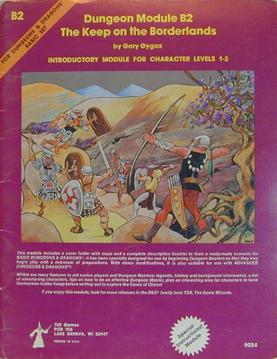
New Campaign - B2 Keep on the Borderlands

A while back I was playing an AD&D 1ed game online set in Greyhawk. My favorite game and setting, in case that isn't obvious yet. Unfortunately that game dissolved after a short while along with a couple other online games I had been playing in. After a short stint looking for something suitable I decided to bite the bullet and just DM it myself. This was in part because the FtF campaign I've been DMing is starting to wind down after ~7 years of play.

So now I'm DMing a Google Hangouts game starting off in the Keep. Naturally I've set it in Greyhawk and will be taking the folks through B2 Keep on the Borderlands to start off. Believe it or not, except for a short foray into the Caves of Chaos just recently, I had never played or DMed this module.
Looking around on the web there is a metric ton of info, game reports, maps, conversions and the like for this module. So naturally I decided to add some more junk to the pile. If someone finds it useful, great, but really I'm just putting it up here as a sort of work in progress, for my own benefit primarily.

My first steps in setting up any new campaign is, and has always been, the maps. Looking around for maps of the wilderness and Keep I found a few that I liked but just weren't 'perfect', for me anyways. So, naturally I took the ones I liked and adjusted them to suit my own tastes and style.

The Hexographer map over on breeyark.org was the closest to what I had in mind, so that's the one I adjusted to my liking.
As you can see I've borrowed things from all over the place on this map.
The scale 'debate' I just sidestepped by making the caves ~2.5 hours to get to by an unencumbered man on foot and left it at that. You'll notice some farmhouses and fields located just outside the Keep. These I placed there because it seemed like a perfect place for the start of a new town, with some protection nearby. The farmers scamper into the Keep at nightfall when the raiding gets to be extreme. After all, they're brave not stupid.


Since this is situated in Greyhawk the next question was where was I going to place it, besides the suggested Yeomanry.
Since I'm planning on tying this in with The Temple of Elemental Evil later I decided to place it not too far away on the Wild Coast along the Jewel River. If you click on the environs map you'll see a spot towards the bottom in the middle of the Welkwood labelled Baridel Castle, the name for the Keep I adopted in my version of Greyhawk.


The next step was the keep itself. The Castellan Keep map over at halfblogre.com caught my eye, so that was the next to get incorporated into my milieu. As you can see I just adjusted it slightly to conform to my view of the Keep. You'll notice I've added some storage towers to the inner gatehouse, as well as switching the location of the stables and warehouse. I just figured the Smith would need direct access to the horses and putting it next to the Smithy/Armorer would make more sense. You'll also note that I added some barracks to the inner bailey since the 250+ inhabitants (mostly soldiers) of this castle needed someplace to sleep, too.

Next time is some old school blue maps of the different buildings inside the Keep itself.

Tuesday, June 30, 2015

Hex Map Updates

A while back I posted a general environs hex map of the Greyhawk area in the 
Lost Temple of Pelor post.

Greyhawk environs

Since then a couple of characters have staked out a couple of hexes for themselves to be cleared out and castles/headquarters built. The two hexes are listed below. Note that the map below includes (3) three new labels; for Brightwoods, the Honey Tree and Lion Castle.


Brightwoods


And below is the exploded 30 mile hex view of the Honey Tree area.


Honey Tree

The Lion Castle area is still TBD but it will contain the very familiar map from the BSOLO module Ghost of Lion Castle.

Thursday, June 19, 2014

Major Powers in Greyhawk

The Major Powers:


The Circle of Eight:

The mysterious assembly of wizards known as the Circle of Eight has long benefited from a past obscured by misinformation and enigma. The group's influence reaches from the Baklunish west to the Solnor Ocean, though its secretive methods ensure that few know the extent of its ministrations. Certain members of the Circle are well-known and liked, their talents appreciated throughout the Flanaess. The mages Bigby, Jallarzi and Otto, for instance, are welcome in courts far from cosmopolitan Greyhawk. Others, such as Drawmij, Nystul, and Theodain prefer to operate away from the public gaze. The Circle is led by the archmage Mordenkainen, who founded it as a tool to preserve the balance of power in the Flanaess and keep any one faction from dominating it. Mordenkainen's view of "enforced neutrality" is not tit-for-tat equality, but rather a detailed theoretical philosophy derived from decades of arcane research.

The Horned Society:


No one knows the true age of the Horned Society. Most scholars believe its Hierarchs were opportunist bandits who filled the void in Molag left by the disappearance of Iuz in 505 CY, only to be swept away in 570 CY after the demigod's return. More ominous speculation places the roots of the organization well before the great migrations of old. Certain old druids speak of the dreaded "Horned Ones," cultists who stalked the night in ancient times and preyed upon the Flan tribes. It is not certain if the modern Horned Society is actually a descendant of this dark sect or simply an imitator exploiting old legends.

In any case, the Horned Society came to prominence in 513 CY, a few years after the disappearance of Iuz in the north, when the cambion's malign kingdom went leaderless. The group seized the city of Molag and set about consolidating the territory around under its rule. Hobgoblins, orcs, and other nonhumans flocked to the Horned Society's dark banner. Conflicting reports placed the group's members as either worshipers of Nerull or devotees of devils. Both seem likely, as it appears the organization was a congregation of many factions, not a monolithic entity. The actual glue that held it together was likely more dogmatic than spiritual.

The Horned Society was made up of 13 leaders, called Hierarchs, including powerful fighters, clerics, rogues and wizards. The philosophy of the Horned Society was rulership through fear and might, with overtones of human supremacy and the subjugation of lesser races to achieve their goals. The Hierarchs and the rest of the leadership were presumed destroyed when Iuz sent his demonic minions into the territory in 570 CY. Still, it is possible, even likely, that they foresaw this event as a possibility and made plans to rebuild in case it became true. Rumors have placed the Horned Society's new headquarters in the Pomarj, Bone March, or even the depths of the Rift Canyon. No one knows for sure, which makes them a threat. The philosophy of the Horned Society has always been to rule through fear and might. Overtones of human supremacy also factor in.


Knight Protectors of the Great Kingdom:

Of all the orders of knighthood in the history of the Flanaess, none was greater than the fabled Knight Protectors of the Great Kingdom. Once many hundreds in number, their membership has since dwindled to perhaps no more than two dozen today. Throughout their history, these knights were formidable warriors with a matchless reputation for courage and honor. They have become the model for numerous orders of knighthood that have sprung up in the Flanaess in their wake, including the Knights of the Hart and the Knights of the Holy Shielding. Their legends permeate the cultures of all the former provinces of the Great Kingdom.

Founded in 537 OR (-107 CY) when a group of young men foiled an attack upon the Aerdy king by a group of Ur-Flan sorcerers, the order has always been auspicious and legendary. From its inception, the order was unique in the Great Kingdom in that it chose its own membership through contests of skill and courage. Positions were not royally appointed, nor could they be bought, like many other knighthoods in the kingdom that were known to come cheaply (such as the Knights of Medegia). The Knight Protectors numbered followers of both Heironeous and Hextor in their ranks; while this produced strong rivalries, deadly conflicts were few. The goal of the order was always a united and protected Great Kingdom under an honorable and lawful monarch.

Unfortunately, the knighthood was betrayed by the paladin Sir Kargoth in 203 CY, and while he only had 13 followers, their betrayal was so great they all became death knights. The order went into slow decline after this, as many loyal knights spent much time hunting down renegades. The royal House Rax went into slow decline at about the same time. In 443 CY, Ivid I set about hunting down and destroying the remaining Knight Protectors, for they opposed his ascension to the throne after he assassinated the last Rax overking. He did not succeed in destroying them, but they became widely dispersed and many went into hiding. Most Knight Protectors today dwell in Ratik, or have joined the Iron League and dwell in Sunndi. With the apparent passing of Ivid V in Rauxes, some expect the Knight Protectors to emerge from their dormancy and take a more active role in the recovery of the Great Kingdom's former realms.

Knights of the Hart:


Once the least militant major order of knights in the Flanaess, the Knighs of the Hart have lately become more "aggressively defensive" in nature. These knights have a tripartite organization formed in ancient days to serve the needs of the lords of Furyondy, Highfolk and Veluna. Because these states are decentralized and thus severely threatened by sudden invasion by any quarter, the Knights of the Hart bulwark standing armies and hunt potential threats. The Knights of the Hart must swear to serve as a vanguard of defense at an instant's notice, maintaining certain strongholds, serving in local governments, and supporting scouting actions into the wilderness and countryside.

Membership in the Knights of the Hart is open to commoners and nobles alike, provided each candidate is devoted to the protection of Furyondy, Highfolk, and Veluna. Further, each candidate must possess proven combat skills and have performed an act of exceptional honor, bravery, courage and service.
This group of knights was designed to make sure that Furyondy, Veluna and High Folk kept their freedom. The nobles and lords of these areas kept their own men-at-arms and guards but to gather them together took time and this problem was solved with the Knights of the Order of the Hart who vow to always be battle ready. They are divided into three branches.

The Knights of Furyondy hold 170 to 200  men. These guys aren't really trusted by Dyvers and Verbobonc even though the Knights are trying to protect their trade. They feel that the knights would be happy to see them become a part of Furyondy.

The Knights of Veluna number at 120 and used to house nothing but seasoned veterans of seventh level or higher, but have begun accepting war clerics, human paladins of at least fifth level and human and half-elven priests of at least sixth level.

The Knights of the High Forest consists completely of elves and has only 45 members. They fight in the Vesve forest and also trade, although they aren't merchants they need the money.

The Knights of the Order of the Hart spend their time drilling, protecting the strongholds and are well respected by the people of their nations. They do have a bit of a rivalry going on between themselves and the Knights of Shielding.


Knights of the Holy Shielding:

These knights are the backbone of the army of the Shield Lands. The Knights of Holy Shielding are paladins and young men hoping to join their ranks usually start as squires. A paladin must be of at least seventh level and be capable of proclaiming some heroic deed. They are well respected in their homeland but have become hated and despised by Iuz and his following with whom they battle.

Established in the mid-300s CY to support the lords of the petty domains north of the Nyr Dyv, the Knights of the Holy Shielding make up the core of an impressive army.

The core of the Knights of the Holy Shielding are paladins, though fighters and clerics of Heironeous are found among their number.

Knights of Luna:

The Knights of Luna is an elven order of knighthood dedicated to preserving the monarchy of Celene and the noble traditions of the elves throughout the central Flanaess. They espouse values that call for elven leadership in the cause of Good, and noblesse oblige toward their allied kindred and the lesser races. Most of the leading members of this order are gray elves from the Grand Court of Celene, although they are currently at odds with the policies of their fey queen and her councilors. Numbering just over two-hundred knights, this order includes many high elves and half-elves, many of them wizards as well as fighters. The majority live and operate in Celene, but increasingly they are found in the Duchy of Ulek, with a small presence among the elves of Highfolk and the Fairdells.

No strict hierarchy exists among the Knights of Luna, though Melf, Prince Brightflame of Celene is their acknowledged leader. Generally, the most senior and experienced knights have the most authority, and they are permitted to take squires of any elven or part-elven lineage. Knightly quests are typically the province of young, inexperienced members fo the order. Successful completion of a score or more quests allow a knight to gain rank and a squire.

Knights of the Watch:


These are the best of the best from the armies of Bissel, Gran March, Geoff and Keoland. They are there to protect from Baklunish threats from the west. They use traditional warfare techniques that cost them dearly when dealing with the humanoids, giants, and groups from Ket.

The Knights of the Watch are divided into two groups. The first is referred to as the Watchers. They stand on their traditions and see no reason for changing them. The second is called the Dispatchers. They tend to split into scouting parties and ambush humanoids in Geoff that shouldn't be there.

They both fight to protect Gran March and Keoland, but while the Knights of the Watch wait for enemies to come, the Knights of Dispatch actively go out and attack them.

The Knights of the Watch was created several centuries ago on the foundation of an earlier organization based in Gran March. Tasked with protection Keoland, Gran March, Bissel and Geoff from the incursions of barbaric Paynims and "westerlings" (civilized Baklunish armies), the Watchers maintain castles, fortresses and strongholds along the border with Ket, as well as in the western mountains.

The Knights of the Watch are devotees of a near-monastic school of teachings based upon the writings of the philosopher Azmarender, who chronicled a code of duty known as the Twelve and Seven Precepts. The Twelve Precepts govern how a knight of the order is to carry out his daily activities, with an eye toward the traditions of battle. The Seven Precepts guide "life beyond the self," giving meaning to the world beyond the field of battle. These latter teachings are jealously guarded secrets, revealed to knights only as they gain station within the organization.


Old Faith:

Oerth's natural fertility has inspired the devotion of its people. The cult of the Oerth Mother (Beory) once dominated the entire Flanaess, and the traditions of her worship persist in many lands. The present hierarchy of the Old Faith is built upon the ancient religion of the druids, though deities in addition to Beory are worshiped. Mistletoe, oak leaves, and holly leaves are their emblems. Druids of the Old Faith are completely neutral in philosophy and personal alignment. They yield only to the world-spanning authority of the legendary Grand Druid.

The practices of the Old Faith are generally in accord with those of other nature priesthoods. The druids do not engage in the sacrifice of sentient creatures.

The Old Faith is still widely practiced in the Flanaess, and not only in those regions dominated by descendents of the Flan peoples. The age-old sacred groves and monolithic circles of the Old Faith may include shrines dedicated to any nature deity the resident druids permit, but most often they are unadorned. While Beory the Oerth Mother is the best known deity associated with the Old Faith, any druid of purely neutral alignment may matriculate through the Nine Circles of Initiation, regardless of which nature god that druid venerates.

Old Lore:

The Colleges of the Old Lore are an order of bards appended to the druidic society of the Old Faith. Very few of these archetypal bards are left, as their traditions are primarily those of the ancient Flan. Bards of the Old Lore are distinguished from today's common bards and minstrels by their noble origins, their tradition of scholarship, and their use of druidic magic. The prospective Old Lore bard must be of human descent and noble birth, although half-elves are permitted as well. Tradition demands that each candidate have proven skill in warmaking and stealth, in addition to surpassing grace, in order to receive druidic training. The Old Lore legacy also includes a small number of magical, stringed instruments crafted specifically for each of the seven colleges of the Old Lore. Recovery of any such instrument is of prime concern to the remaining members of the colleges, and the true enchantments worked by the ancient craftsmen only come alive at the touch of a bard of the Old Lore.

People of the Testing:

The mystic cabal known as the People of the Testing is a society of elves whose members are scattered across the Flanaess. These elves are loosely bound by the memory of their experiences in the elven otherworld discovered by the Moonarch of Sehanine. The Moonarch appears only while Oerth's lesser moon, Celene, is in full phase, and the Moonarch is never encountered twice in the same location. Thus far, it has only been reported in the northern region of Celene.

Those elves who pass under the Moonarch must then pass a series of spiritual tests administered by three elven deities. Some elves never return from their journey through the Moonarch, but all those who do are profoundly changed. Some withdraw from the concerns of their previous lives and heed the Calling Away, which many call the Leaving, even though they may have centuries of life remaining to them. These elves immediately travel to the Lendore Isles; what becomes of them is not known. Other elves may become clerics (usually of Sehanine), seers, poets, savants or outcasts. From among all these come the People of the Testing.

The concerns of the People involve the destiny of all elves and their vision of the true nature of elvenkind. They are said to have special insights into the Mysteries of Faerie, but their practices are by no means as sensual as those of traditional elven participants. They see more deeply than other elves and have secret knowledge of forgotten magic, ancient banes, hidden realms, and lost races. They guard their secrets carefully, and few publicly acknowledge membership in the People of the Testing. They are present in all levels of society, however, and they use their influence to keep elven interests secure in the Flanaess, no matter what the cost to other races.

The Scarlet Brotherhood


This group makes it's home on the Tilvanot Peninsula. Their one driving goal since it's founding a thousand years ago is to have the Suel recognized as the master race throughout the Flanaess. Apparently there was a premonition of doom right before the Rain of Colorless Fire descended upon the Suel Empire. One man named Kevelli Mauk that had founded the Brotherhood three years prior had enough time to gather ten of his students along with their slaves, the Tome of the Scarlet Sign (the Brotherhood's manifesto) and use a now lost artifact called Lendor's Matrix to teleport them all to the western side of Hellfurnaces just before the fall of the Rain of Colorless Fire.

They, over time, eventually made there way down into the Tilvanot Peninsula where they reside. They believe that by their physical perfection, the early birth of their empire and their mastery of magic that they are the superior race. They are a people where assassins and thieves are as common place as farmers and merchants on the main land.


Silent Ones of Keoland:

This ancient society is almost entirely closed to outsiders, but its mystique and influence extend throughout the valley of the Sheldomar. The Silent Ones are said to form the backbone of an eldritch order that seeks to protect the last vestiges of Ancient Suel magic that has remained in Suloise hands since the Rain of Colorless Fire. Whether the order is actually this old is uncertain, since they communicate little outside their own circles. What little is known of the Silent Ones comes from one of the few individuals who departed it alive. Uhas of Neheli chronciled some of their exploits in The Chronicle of Secret Times.

The group's name comes from an ancient Suloise phrase literally translated as "those who must not speak." It is something of a misnomer as the Silent Ones are by no means mute, but they are extremely secretive and do little to dispel the aura of mystery that surrounds them. These ascetics live completely outside the authority of the ruling Keoish king, according to the first lines of the founding charter of the nation, penned nearly one thousand years ago. They do not form a magical guild in the traditional sense, as supplicants are not usually accepted into the order. Rather, they are chosen during pilgrimages conducted by the Silent Ones annually during Needfest, when the scour the countryside for youths especially attuned to their ways. Those chosen are said to be gifted in some way, and most of them are of pure Suel bloodlines. Curiously, many of the chosen are also albinos and frequently are blind. Uhas of Neheli was both.

In centuries past, sorcery was in the hands of a small few in Keoland, and the Silent Ones monitored this tradition with dispassion. That is no longer their role, though they are still viewed with fear and superstition. Silent Ones seem to be drawn to ancient places and items of strong magical power and import. On rare occasions, they openly contend with individuals, both good and evil, who seek magical power beyond the ken of mortals. Recently they have expressed disquiet over the rise of the Secret Brotherhood of the Elder Eye and the uncovering of Slerotin's Passage from the Yeomanry to the Sea of Dust.

Minor / Regional Powers


Rangers of the Gnarley Forest


This "little" group consists of more than two hundred rangers. They come from all over to protect the vast expanse of the Gnarley Forest. There is no set order of command except for several Ranger Knights that gather every two to three months to exchange information. Young rangers are taken in under one of these Knights and trained although rangers of any level may join by finding one one of these Ranger Knights, be interviewed and pass several woodland tests.

The rangers are a close group and will come to one another's aid as soon as possible. Even the animals of the Gnarley Forest seem to cooperate with them by dragging wounded rangers to safety or alerting to possible dangers. Their main goal is to control lumbering in the wood, flush out bandits and protect the people of the Gnarley Forest.

They also must stay close the the forest. Any extended leave of over six months must be approved by a Ranger Knight and long journeys away without good cause will usually result in the ranger being asked to turn in his/her insignia of oak leaves.

This is an update of the previous entry on Organizations & Societies.

Just as an FYI the current campaign's timeline is set in 577CY, with no plans on instituting the Greyhawk Wars. 

Wednesday, July 11, 2012

City of Greyhawk Map - Undercity

While the current Greyhawk campaign is on hiatus I still am working on certain aspects of that campaign. Since I have always loved maps of all sorts and in all forms I have been continuing my City of Greyhawk maps. While there are still many improvements to be made here is a work in progress on my current undercity map of Greyhawk.


City of Greyhawk - undercity
The above ground City of Greyhawk article  that I posted previously.

Thursday, March 15, 2012

Greyhawk City 3D

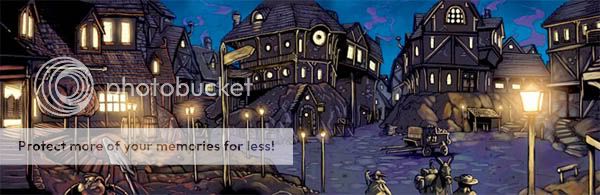
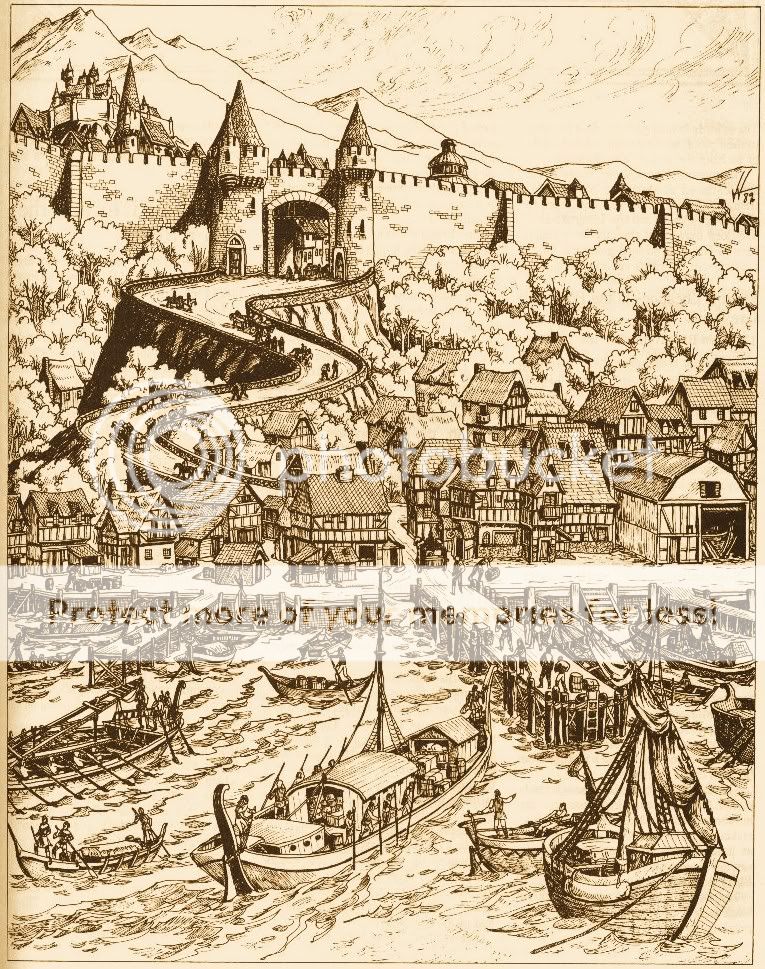
I ran across these over on cghub. They were having a design contest, and I just felt I had to share these images by AaronRogers


Monday, February 27, 2012

Greyhawk in Dragon Magazine in 2012


This from Chris Perkins editorial blurb at Wizards;

"This year in the magazines, we’re taking a break from the Nentir Vale “points of light” setting to shine a light on the Forgotten Realms as well as some of our other popular worlds, past and present. You’ll see more Eberron articles, more Dark Sun articles, and even some content for Ravenloft, Planescape, and the World of Greyhawk. But the Realms, in particular, will receive a lot of love."

Now while I do have a lot of Forgotten Realms material my first love will always be Greyhawk. This dates back to the release of the Greyhawk Folio back in 1980. Greyhawk was the first published world I traveled into and explored with my friends. My longest campaign to date (8 years) has been set in Greyhawk. Lately I have been re-visiting the 'Gygaxian' Greyhawk where possible. By that I mean I have forgone the use of 2ed material in favor of customized "City of Greyhawk" maps. I'm not dumping all of the later material, but in my version of Greyhawk "The Greyhawk Wars" never happened. I'm currently gaming with a group and the campaign start date was 575 CY. We'll see where the campaign leads to from there. We've already made it to 576 while exploring the Temple of Elemental Evil.

But getting back to the Dragon articles, I'll be waiting to see what if any new material they will be putting out, or are they just going to update the old material they already have like they did with the 4ed Hommlet release.

Monday, February 20, 2012

Free City of Greyhawk


The Free City of Greyhawk is known as "The Gem of the Flanaess."  As of c550 the city is prospering, though the grey hawks indigenous to the city have disappeared, replaced by ravens.  Many secrets are held within the city.


Early history

Greyhawk, named for the small grey hawks which populate the region, was originally a trading outpost on the Selintan River specializing in local wood and woven garments. In time the town developed strong textile and meat-packing industries. Eventually, Greyhawk came to be ruled by a warlord, who took the title "Lansgraf of the Selintan". His son was then married to the Gynarch of Hardby's daughter. The nuptials formalized a political alliance that served as the basis for rule over the Lanstadt of Selintan, an area that eventually became known as the Domain of Greyhawk.
In 4 CY, Greyhawk came under the domination of the Great Kingdom of Aerdy and remained so while strong Overkings ruled from the Malachite Throne in Rauxes. By the third century CY, the Great Kingdom's influence over the city began to wane as the Overkings fell into evil ways and their hold on distant provinces became increasingly tenuous.

Rise to prominence, decline and recovery

Circa 310 CY, the mage Zagig Yragerne emerged from the Wild Coast and bribed his way into a seat on the Directing Oligarchy. Soon after, the Oligarchs elected Zagig Lord Mayor.
Greyhawk subsequently rose in fame and prominence under the leadership of Lord Mayor Zagig. He instituted legal reform, developed a new currency, fortified the walls, founded the city's first university and embarked on a major building program. Most notably, he directed the construction of nearby Castle Greyhawk.
Although Zagig, later known as Zagyg, became increasingly erratic over time, his rule is generally considered to be the most effective in the Free City's history and brought widespread prosperity to the region. Much to the annoyance of Dyvers and other rival cities, Zagig proclaimed Greyhawk to be the "Gem of the Flanaess," and did much to ensure this moniker was justified. Unfortunately, the "Mad Archmage" suddenly disappeared in 421 CY, leaving no clues regarding his whereabouts, and no heir to inherit the title of Lansgraf.
In 498 CY, after decades of Zagig's absence, the Lanstadt was therefore abolished, the title of Lansgraf permanently retired, and the Free City's Directing Oligarchy assumed political authority. The new Lord Mayor Paerinn officially proclaimed Greyhawk a free city, though it had been effectively independent of the Great Kingdom's rule for over a century.
Soon thereafter, the city lost its claim over Hardby and the Wild Coast, as the leading women of Hardby broke from Greyhawk and established the ruling office of Despotrix. This loss of lands sent the Free City into economic decline, a situation that persisted for several decades. Fortunately, the discovery of treasure in the dungeons beneath Castle Greyhawk and other nearby locales set off a gold rush of sorts, and Greyhawk's economic fortunes recovered substantially in the latter half of the sixth century.


Geography

The Free City of Greyhawk is located centrally in the Flanaess, which is the easternmost part of the continent of Oerik on the world of Oerth. The city controls a large swath of land along the Selintan River from the Nyr Dyv south to Woolly Bay most of the Cairn Hills, parts of the Gnarley Forest, the northern Wild Coast, and parts of the Abbor-Alz. The entire region is officially known as the Domain of Greyhawk. The Domain is bordered on the east by the Abbor-Alz and its western border lies within the Gnarley Forest. The area south of Greyhawk City along the Selintan is known as the Plain of Greyhawk.

Settlements

Several settlements fall within the Domain of Greyhawk:

Blackstone, Diamond Lake, Elmshire, Ery Crossings, Erybend, Greatrock, Greyhawk City, Greysmere, Grossetgrottel, Hardby, Magepoint, Narwell, One Ford, Phandlish, Safeton, Steaming Springs, Two Ford.

Population

As of 550 CY, the city itself boasted a population of 58,000, making it one of the largest cities on Oerth. The population for the entire Greyhawk Domain is roughly 75,000-100,000+, including the larger towns of Safeton (pop. 6,100), Hardby (pop. 5,100) and Elmshire (pop. 4,000).

Religion

The Free City of Greyhawk hosts temples and shrines to many deities, including Beory, Boccob, Celestian, Corellon Larethian, Ehlonna, Fharlanghn, Garl Glittergold, Heironeous, Istus, Kord, Kurell, Lirr, Moradin, Norebo, Obad-Hai, Olidammara, Osprem, Pelor, Pholtus, Procan, Ralishaz, Rao, Saint Cuthbert, Trithereon, Ulaa, Wee Jas, Xerbo, Yondalla, and Zilchus. The worship of evil deities and fiends is forbidden, and such cults, though they may have followers, do not have a public presence. Evil religions that have established a base in the city in recent memory include those of Incabulos, Iuz, Nerull, and Vecna.

Government

Executive branch: Greyhawk's Directing Oligarchy elects one of its own to as Lord Mayor, who serves as the head of state in addition to his directorial duties. The current Lord Mayor, Nerof Gasgal, has held office since 550 CY. The Lord Mayor heads both the Directing Oligarchy and the Council of Mayors and Manorial Lords. The chief of state also officially heads the military, though actual command is most often left to the Captain General of the Watch.
Legislative branch: The Free City of Greyhawk is ruled by the Directing Oligarchy, an executive council of twelve to eighteen members representing the City's major professional guilds and the military. In some cases, the Oligarchy may include important wizards or clerics. New Directors are chosen by current council members when a vacancy must be filled.
The Greyhawk Council of Mayors and Manorial Lords is an annual assemblage of leaders from the various baronies and towns in Greyhawk Domain. In theory, this gathering allows citizens of the Domain to have a voice in the governance of the region, but in practice this Council has little real authority.
Judicial branch:Major legal matters in the Free City of Greyhawk are adjudicated by a Judge of Greyhawk, one of eight such officials appointed by the Directing Oligarchy. One of these eight is chosen to serve as Chief judge of Greyhawk, a position currently held by Sir Anton Palmirian who also sits on the Directing Oligarchy and oversees the Guild of Lawyers and Scribes. In cases of great import, three Judges of Greyhawk may preside. Appeals of major cases are always heard by a panel of three Judges of Greyhawk, though the Lord Mayor sometimes sits in place of one of the Judges.

Transportation

Several roads link the settlements of the Domain of Greyhawk, including the High Road (from Greyhawk City to Elmshire), the Urnst Trail (from the High Road to the Duchy of Urnst), the Western Road (from Ford Keep on the Selintan to Dyvers), and the River Road (south from Greyhawk City along the Selintan).
Much river traffic takes place along the Selintan River, which can accommodate all but the largest sea-going vessels from the Nyr Dyv and Woolly Bay. Smaller vessels ply the Ery and Neen rivers.

Military

The Domain of Greyhawk's military forces, though technically under the Lord Mayor's authority, are usually commanded by the Domain's highest-ranking military officer, the Captain General of the Watch, who also sits on the city's Directing Oligarchy. The current Captain General is Tigran Gellner.
Greyhawk's forces consist of several units, including: The Cairn Hills Force, led by Commander Schinus Balint. The Greyhawk Mountaineers, led by Commander Carstane Geronten. The Hardby Marines, led by Commander Wilbrem Carister. The Narwell Headhunters. The Safeton Garrison, led by Commander Turin Deathstalker. The "Water Rats."

Free City of Greyhawk HeraldryHeraldry


Based on Joe Bloch's hand drawn maps, which were in turn based on Gary Gygax's sketch map in the beginning of "City of Hawks". This map is also designed to use the keys in the TSR blue boxed City of Greyhawk set.


Clicking on the city will bring up a much larger image.
Note this City of Greyhawk map is a work in progress
Edit: Current state of the map;


See part 2 of this article as well as the Greyhawk undercity map.

Monday, November 14, 2011

Adventure Recap

September 12, 2011 18:06
Hello and well met, your friendly narrator here to catch us up on the story. First and foremost I would like to apologize for the lapse in updates; to anyone who follows our plight. I was very busy ridding the world of danger and spreading peace across that land!
In my mind:

In actuality:

So, in short yea I goofed off. I’m sorry. But I digress, onward to our update!

When last we left off we had lost our dear companion Elmo. We decided that we would make the fiends pay. And due to the large amount of time that has passed I will be making a bulleted list. My deepest apologies for a less than par update.
  • The Moathouse
    • Lareth the Beautiful is their leader.
    • We brought him to his limits and he wanted to bargain.
    • He casts magical darkness to escape.
    • We backed off for a while, they reformed their army.
    • They began using spells and wards to hamper us.
    • We head to the Inn to find more members- Brandoboris a halfling fighter and Melf a half-elven thief wizard.
    • We lost Spugnoir and Brandoboris in a bloody battle.
    • We wised up and returned with Burne and Rufus.
    • Fireball took everyone down, McDirk smote Lareth in the name of Pelor.
  • Moving On
    • We meet James of the Golden Tongue in the Inn, who turns out to be an Assassin.
    • Melf is killed in his sleep
    • James attacks us in the night, we employ a Mage, Branton, to help us in the midnight brawl.
    • Branton likes us and joins us for an equal share of loot.
    • We pursue the enemy to Nulb, looking for a Mr.Green who employed the assassin.
    • We catch James and send him to jail, we give our account but he manages to escape.
  • Nulb
    • We meet Hruda and Mother Streng
    • McDirk’s medallion glows when Streng approaches telling us she is trustworthy and good
    • She sends us to meet Otis, Elmo’s “brudder”
    • He gives us information about the doors of The Temple of Elemental Evil, runes that will drive us insane, and ward us away; He would also like us to raise his brother.
  • To the Temple of Elemental Evil
    • We first head to the outer tower.
    • There are many enemies holed up in the tower.
    • Through superior tactics and bravery we are victorious with minimal losses.
    • Mathias and Branton are affected by the doors of the Temple and may never again approach them.
    • We take over the abandoned tower outside the ToEE as our base of operations near the Temple.
    • When we go to restock we encounter Lizards, we gut them and hit a mother load of treasure and loot.
  • Entering the Dread Temple
    • Upon entering the temple we find much artwork and statues of vile and sick acts.
    • Murder, Dystrophy, Malady, and Misanthropy are the themes, the marble is a sickening colour much resembling the innards of humans (relax it’s just marble but they wanted ugly marble)
    • We are attacked by Harpies (as an aside this is a “Kill Room”)
    • Being charmed by the Harpies, another room opens and we are swarmed by Ghouls.
    • The party is then captured by cultists and given a choice “serve us or die”.
    • Arthur and McDirk choose death.
    • Branton and Mathias say they will serve, however once given an opportunity Mathias sneaks out of the temple to safety, Branton is not so lucky and decides to remain and collect information that he will later use to exact revenge after his rescue.
  • Another approach
    • The Temple of Pelor in Greyhawk sends out Griffith, a Cleric of Pelor; and his long time friend Winton, a Paladin of Heironeous to look for the missing McDirk.
    • Also, in town we meet a Fighter, Dirk who accompanies us.
    • When bumbling around in the woods the party happens upon The Lost Temple of Pelor (forever known as the “Lost Found Lost then Misplaced and Rediscovered Temple of Pelor (the stern)”)
    • It was besieged by orcs, which we overtook and reconsecrated the LFLtMaRToP(tS).
    • There is also a village that is in shambles next to the Temple.
    • We meet up with Branton, Winton notices he is being escorted by agents of the ToEE so he attacks them and slays them.
    • The previous parties Tower is still standing and stocked.
    • In exploring a small cairn the party discovers a "Wishing Well" pool, that we all toss money into, The Party is now granted a Limited Wish.
  • Pembrose
    • Our reputation precedes us and Lord Kyle invites us for dinner.
    • He needs help with some problems in his surrounding area.
    • We meet a farmer named Borne, he’s having livestock trouble.
    • It’s troll trouble, we handle the trolls and save his farm.
    • Lord Kyle then send us through the Adlerweg to help him reclaim a castle that has been in his family that is now over thrown by orcs.
  • Bostwick
    • We meet the town leader Wychick who no one really trusts.
    • We meet Jeffra a surprisingly level headed follower of Pholtus of the Blinding Light
    • In our travels Winton meets a sentient glove that implores him to accept it’s aide in reclaiming the Adlerweg for Lord Kyle
    • There is an Ogre in charge of the taking of the castle.
    • He is trying to start a war with Pembrose and Bostwick by kidnapping the fire giant’s daughter.
    • We foil the plot and defeat the Evil Gauntlet (that is the anti-thesis to Winton’s Sentient Gauntlet) with an EPIC HIGH-FIVE
  • Back to the LFLtMaRToP(tS)
    • We meet a fighter Thomas Maplewood who agrees to come along for a fair share of loot.
    • Pelor grants Griffith a vision, all is not cleaned in his Lost Temple.
    • We go to the sub-basement to clear it out.
    • There are Ankhegs that wound the party.
    • Deciding to run head first into battle and that "Fortune Favours the Bold"; a wounded Winton leads the attack
    • Rushing bravely beneath each foe, he manages to slay two; the third however, literally tore Winton asunder.
    • We return to the Free City of Greyhawk.
    • In town the party meets Geraldt who states “I don’t care, just give me a cut and I’ll work with you”.
    • His stay is short lived and plagued with bad luck, possibly because of his nihilistic nature.
    • We meet a neighbor Joan who is very nice and very helpful to the party.
    • The party attempts to clear out a tower in the village that is nearby the lost temple.
    • There are many ogre and troll guards there.
    • Thomas dies in this incident.
    • We escape and head back to the lost temple.
    • In the night we are assaulted by the leader of the trolls we had escaped from.
    • Geraldt, in an uncaring and greedy maneuver, attempts to assassinate the leader; and fails miserably and dies.
  • Denizens of our Graveyard
    • Heading back to City of Greyhawk to get tombstones.
    • We meet Etheridge by the Fighters Guild, who wishes to join for an equal share and adventure.
    • Heading back to City of Greyhawk to resupply after many battles and delves into minor dungeons.
    • Etheridge and Dirk take on some odd jobs as mercenaries (at the behest of the Fighters Guild)
    • The Clerics of Pelor would like Griffith to find “The Font of Pelor” in the ToEE.
  • To Bostwick
    • We hear of activity in the graveyard.
    • In Bostwick we meet Tomasz Bergmann, a magic-user and follower of Boccob.
    • The graveyard outside of Bostwick hides a Temple of Nerull.
    • We meet a patrol of elves looking for their stolen statue.
    • When we arrive home we find that Winton’s grave has been disturbed-his skull was taken.
    • Tensions are mounting because of the Elves lost statue, they believe humans stole it.
    • We head back to the Temple of Nerull, and find that Lareth "the Beautiful" has been raised.
    • We overthrow the Temple and recover the missing statue; it was hidden in the Nerullian Temple.
    • They wanted to start war between the elves and humans.
  • To Lord Kyle
    • We need a place to stay after taking out the Temple of Nerull.
    • Lord Kyle gives us a standing invitation to his mansion whenever we need help.
    • We are awoken in the night by someone trying to assault Lord Kyle’s mansion.
    • It’s an assassin sent by Wychick
    • We go to Bostwick to get some answers, Wychick runs but is caught by Etheridge
    • We deliver him to Lord Kyle so he can do what he must.
  • At long last we are current
    • We are implored by some gnomes to help them clear their home.
    • Ogre’s have taken it over, and we agree to help; because that’s what good adventurers do.
    • We happen upon a room, that has a pair of Female Ogres attacking a halfling.
    • Upon slaying the assailants we realize that they had their two baby Ogres in the room watching.
    • We decide that it now rests on our heads to raise these babies, and show them that there is more to life than senseless slaughter and evil ways.
That is where we will leave off. Mainly because we are now caught up


and I will hopefully be updating more diligently. So until we next meet, fare thee well!

Sunday, August 7, 2011

Free City of Greyhawk part 2

Free City of Greyhawk Streets

For part 1 of this article go here.

From the darkest alleys and most fetid cellars of the Old City, along the alabaster spires of temple and university lining the great length of the Processional, and on to the regal grandeur of the High Quarter and the looming towers of the Grand Citadel beyond...
The city beckons. Greyhawk, grandest jewel of the Flanaess, awaits you, offering adventures to stagger your imagination, treasure beyond your wildest dreams-and of course, dangers aplenty.
The city and its lands lie in the heart of civilized Oerth. The barren slopes of the mysterious Cairn Hills loom to the north of the city, within sight of the high walls. The placid expanse of the great river Selintan meanders past Greyhawk's bustling wharf region, giving the city its primary claim to strategic significance, for it lies along that waterway between the great lake of Nyr Dyv to the north and the broad surface of Woolly Bay and the Azure Sea to the south.
The City of Greyhawk and its domain are ruled by a Directing Oligarchy, a group of technically coequal members who head various major interests within the city. The number of Oligarchs (also known as directors) usually varies between 12 and 18, depending on the political circumstances. Replacement of an Oligarch who dies or retires is not required. If a vacancy in the Oligarchy should be filled, the new Oligarch is chosen by vote of the current Directors. The Oligarchy meets every Starday during the year to cover business relevant to the City, the Domain, and themselves.
The Directing Oligarchy periodically elects a Lord Mayor among it's members to lead them. The election of a mayor occurs whenever the old mayor dies, retires, resigns, or fails a no-confidence vote consisting of a two-thirds majority of the Directing Oligarchy. Since 570 CY, Nerof Gasgal has been the Lord Mayor. So far, he has been one of the best.
The guilds of Greyhawk are all designed to protect and further the social and economic interests of their membership. While not all of the Free City's Guilds have been granted or have been able to maintain a monopoly on the services and crafts they provide, they can nevertheless present a united front to any form of competition and have a recognized degree of political influence with the Directing Oligarchy.
On the first days of Fireseek, Planting, Reaping, and Patchwall, the Grand Council of Greyhawk Guilds meets at City Hall. All the city's Guildmasters are required to attend (and must send deputies should they be unable to do so). This meeting is used to discuss petitions and legislation before the Directing Oligarchy that may affect the trade or business of one or more of the Free City's guilds, and allegedly serves the purpose of granting those city guilds not directly represented in the Directing Oligarchy a say in the city's government.


Craftsmans' Quarter


This quarter of the Free City is one of the most peaceful, lacking the wild taverns and crowds of most other districts. The Craftsmans' Ward is home to hardworking people and their families. Its major features are the guildhalls for many of those craftsmen and women.
Sure, the Craftsmans' Ward has its share of taverns, but these are quiet, neighborhood places. Most of the customers recognize each other and the proprietor--who is usually the owner. Strangers are treated cordially, but any unruliness arouses the resentment of the entire establishment. The City Watch, while not a great presence here, is not neglectful.
The houses here are small. At first glance one might think they are crowded uncomfortably close together. Upon closer examination, the buildings all seem to fit snugly together, while leaving a surprising amount of space between them.
The hallmarks of each tradesperson can be seen on the front of the house: an ornately carved balcony and railing for the woodcarver, a wide, sweeping stairway for the carpenter, an imposing facade of granite for the stonemason, and so on. Weavers, painters, metalsmiths, and the like use an example of their craft to decorate the front of the house--a tapestry, unusual color scheme, or metal rack of tools, for example.
While some of these artisans work for employers and travel to a different location for their job, the majority work in shops within their homes. Consequently, a great number of different businesses can be found in the Craftsmans' Ward.


Craftsmans' Ward Businesses
Shipper and Haulers, Brewers, Leatherworkers, Weavers, Tailors, Metalsmiths, Jewelers, Gemcutters, Furniture Makers, Carpenters, Stonemasons, Architects, and Taverns with food


Clerkburg--The Halls


The city district that houses Greyhawk's universities, colleges, and schools is referred to by two names: "Clerkburg," as a reference to the students, tutors, scribes, and clerks who live here in great numbers; and "The Halls," meaning the large, airy buildings that typically house the schools.
Though it is not apparent from outside the quarter, Clerkburg is an area of plants, grassy yard, and small parks. It is second only to the Garden Quarter in the number and variety of its greenery.
The City Watch does not neglect Clerkburg. Generally a patrol arrives within 2d6 rounds of a summons. The People's Constables tend to avoid Clerkburg, to no one's disappointment.
An interesting feature of the quarter is the outside seating, or veranda, available at most of the small taverns and eateries. It may be squeezed precariously between the building and the street, barely wide enough for a single row of tables, but this outdoor dining area is required of any successful eating establishment in Clerkburg. In fact, the major attractions of this district to the citizenry of the city are these street-side tables. On Godsday with nice weather, the streets of Clerkburg swell with folk from all over the city, coming to enjoy their meal in the fresh air.
Clerkburg is not a thriving business district--most of the buildings not used for schools are the residences of students and instructor. However, the following types of establishments can be found here:


Clerkburg Businesses


Art Galleries, Bakeries, Boarding Houses, Book Binderies, Butchers, Inksellers, Launders, Leatherworkers, Locksmiths, Potters, Private Libraries, Scribeshops, Tailors, Taverns, Tiny Food Shops, Weaponsmiths, and Weavers.


The High Quarter


What a grand array of buildings and personages await the fortunate traveler who decides to stroll down the Promenade! What marvels of architecture! What splendid grace and beauty, such impressive style!
The grand edifices of the Free City's High Quarter are, in general, mansions that would be fit for the ruler of most political entities. In Greyhawk, however, such homes are the just rewards for successful merchants, important ambassadors, the city's own Directors, and others of wealth and station. (Actually, in the Free City, wealth is station.)
The mansions sprawl over large estates--an equivalent amount of property might hold the homes of 1,000 souls in the cramped confines of the Old City.
Stores and shops are not found in the High Quarter; the residents can usually find everything they need at the city's High Marketplace. The only businesses in the quarter are those gambling houses, taverns, and clubs that cater to a wealthy clientèle.
The noble district is the best illuminated of the city's quarters after dark, for each mansion maintains a lamp on the road before it, and the city maintains other lamps at frequent intervals along each thoroughfare.
In addition, the guard patrols of the city watch are diligent and common in the High Quarter. A standard patrol will arrive within 1d6 round following any loud cry of alarm in the High Quarter.
Also, the private agents of the night-watchmen are employed throughout the High Quarter, sometimes to watch a single mansion, and other times to patrol a region of several estates. When the night-watchmen from such roving patrols, they go in groups of five, accompanied by two great hounds (war dogs).
The roads of the High Quarter bustle with crowds only on the occasions of parades and festivals. The quarter receives a lot of traffic every Starday, attracted by the grand array of booths and stalls in the High Marketplace.
Otherwise, the quarter is quiet, with only a few people moving about at any one time. These travelers are nobles in carriages, on horseback, and afoot, their servants (with or without their masters), craftsmen hired to work in the High Quarter on their way to and from the job, and many others. Travel is allowed to and from the High quarter with no restrictions, but a visitor to the quarter who appears to be up to no good (loitering about, acting furtive, associating with known criminals, etc.) is quickly accosted by a guard patrol. If the visitor can produce no good reason why he is in the High Quarter, he is escorted out with orders not to return without a valid purpose


The Garden Quarter


The Garden Quarter sits right above the High Quarter, In truth, an untutored observer could not tell where one district ends and the other begins. But the boundaries are clearly defined in the collective social consciousness of the city's elite.
If the estates in the Garden Quarter tend to be a little smaller than their uphill neighbors, if their statuary is less exquisite and the architecture more plain, these deficiencies are more than made up for by the brilliant profusion of blossoms grown here. The sweeping expanses of manicured beauty have given the quarter its name and its character.
On a pleasant spring day the fragrance of lilac is carried by each passing breeze, while in summer a stroller can sample the dewy aroma of the lilies, and so on.
The patrols of the city watch are as diligent and common here as in the High Quarter, though there are fewer hired security agents in the Garden Quarter.
There are no shops in the Garden Quarter, save for the region of the Marketplace. Several fine inns and clubs offer fine cuisine and often gambling to wealthy patrons.


Foreign Quarter


This is the most crowded quarter of the New City, not just because this is the residential district assigned to all those who have not inherited or adopted Greyhawk citizenry, but because it is a nice place to live. It offers a variety of eateries and taverns, as well as tiny shops of many unique types.

It has long been city policy that visitors who take up residence in Greyhawk should not be allowed to inhabit certain areas, particularly places adjacent to the city wall. Thus, all foreigners who actually rent a residence (as opposed to taking a room in an inn, even for many weeks) must find such a residence in this quarter. Of course, foreign nobles and official guests of the city are exempt from the restriction.
Foreigners are not permitted to purchase property in the Free City. After seven consecutive years of residence (at least six months each year) in the city, a foreigner can apply for citizenship. Provided he has two citizens to vouch for him, and no record of troubles with the watch or any influential guilds, citizenship is granted.
Certain of the Foreign Quarter's shops and inns retain a distinctive character reflecting their owners' origins. But for the most part this district has blended very well into the rest of the Free City's character.
The City Watch is here, but not in any considerable numbers. The People's Constables on the other hand, are a common and bothersome presence during daylight. At night, the Nightwatchmen's Guild puts regular patrols through this and the neighboring River District. In many ways it is representative of the city in miniature, with its diversity of shops, its theater (the Pit), and its mix of people from all places and all levels on the social scale. Indeed, the Foreign Quarter even has its own nobility, in the form of The Duke.
Every type of business can be found in this quarter. Problem is though if you asked someone where to find what you are looking for, half the time the directions are wrong.


The Old City


This maze of alleys, shacks, boarding houses, and everything else is the true soul of Greyhawk. Herein lie the city's roots, and herein also live its most volatile citizens.
The Old City, separated by the Black Wall from the New City, has taken on a life all its own. If the New City should suddenly disappear from the earth, the Old City would function much as before. The same cannot be said for the reverse.
The Old City sees less of the City Watch than do its neighboring districts. Crime and misery are commonplace here, but so are gallantry and decency.
Thieves control the bulk of the business ventures and other activities, but nowhere else is the proverb "honor among thieves" more in evidence.
The Nightwatchmen maintain two regular stations here, and many families devote a proportion of the precious incomes for the additional protection provided by the guild. And the Nightwatchmen in the Old city take their duties very seriously indeed--their fee is always money well spent. The City Watch patrols are scarce to nonexistent, but the Nightwatchmen usually respond quickly, but only when the alarm is raised by one of their clients.
The People's Constables are a major nuisance here during the day, nit-picking every possible weapons violation, subjecting disreputable-appearing characters to searches, and quoting an assortment of vague and obscure regulations. ( "And that'll be another two silver, oaf--you should know better than to blow your nose on the same street as waves the city banner! Be thankful I don't run you in!")
The balance of power in the Old City centers on the Thieves' Guild, which controls the major sources of income here, except for the Public Bath, which is owned by the city. The Beggars' Union is a force to be reckoned with in the Slum Quarter, however, and the Merchants and Traders are also well represented in the Old City. The patrols of the City Watch move unchallenged here during the daytime, but at night two patrols always march together. Even then they remain on the lighted thoroughfares and other major avenues.
The border within the Old City between the Thieves, Labors', and Brewer's Quarters is ill-defined.


Businesses:
Armorers, Bakers, Brewers, Bawdy Houses, Blacksmiths, Boarding Houses, Brewers, Butchers, Carpenters, Embalmers, Expedition Supplies, Inns with Food, Jewelers, Laundry Services, Leatherworker/Tanners, Livery Stables, Locksmiths, Pawnbrokers, Potters, Scribes, Shipper and haulers, Stonemasons, Tailors, Taverns, Warehouses, Weaponsmiths, and Weaver/Dyers


River Quarter


This most riotous district is centered around the great curving avenue known as the Strip. With its taverns, brothels, gambling dens, and worse, the Strip at night is a cacophony of noises, a shadow land of flickering torches and blazing lamps. And always, day and night, it teems with drunks and toughs, river men and city folk.
Always there are many who fight at any implied slight, and never are there enough patrols of the City Watch to keep the peace.
People's Constables are common during the hours of daylight, especially near the Cargo Gate. There these tin-pot enforcers of law and order nab many people just off the river, before they have a chance to adjust to city life.
Naturally, adventurers love it here. Lodgings are cheap, and news from the world beyond is plentiful. There are numerous merchants and innkeepers willing to relieve a traveler of his heavy load of treasure.
Behind the Strip the River Quarter is a mixture of boarding houses and warehouses. While much cargo brought up the river is stored on the wharf, many small warehouses are offered for rental here as well. Cargo moves quickly in the lively economy of the Free City, so a load generally remains in a warehouse only for a week or two.


Businesses:
Armorers, bakers, bawdy houses, boarding houses, boats/nautical equipment, boot maker/leatherworker, butchers, eateries, expedition suppliers, shipper and haulers, tailors, taverns, warehouses, and weaponsmiths.